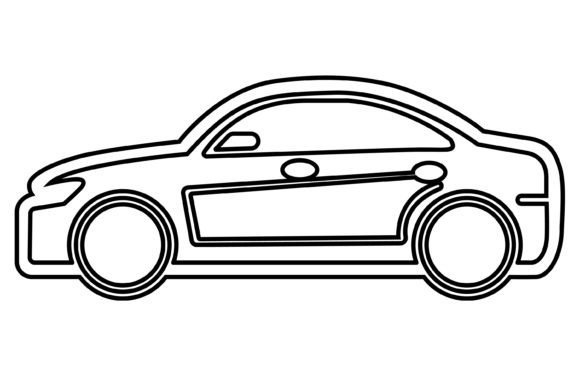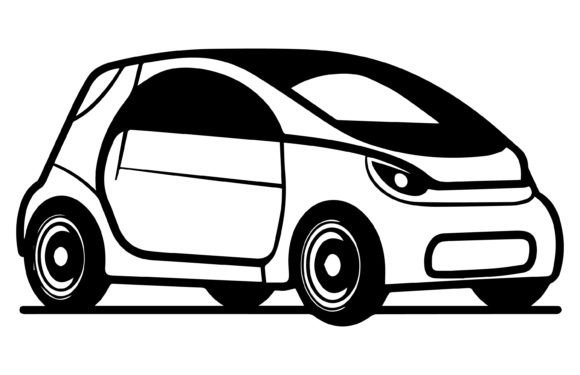
Vehicle Car Vector Illustration: Your Flexible Design Asset
When you are building a brand, creating a presentation, or designing a mobile application, finding the right visual language is critical. Stock photography can feel generic, and sometimes you need a specific style that is both clean and modern. This is where a strong Vehicle Car Vector Illustration becomes an indispensable tool. Unlike a static image, this type of asset is built for versatility. It allows you to adapt the visual to fit the exact needs of your project without losing quality, whether you are working on a massive billboard or a tiny app icon.
The Anatomy of Modern Vector Art
Understanding what makes a good Vehicle Car Vector Illustration helps you use it effectively. At its core, this style of illustration relies on mathematical paths rather than pixels. This is why the included EPS format is so valuable; it is a true vector file. You can scale the image to the size of a skyscraper, and the lines will remain perfectly crisp. The visual personality of these assets usually leans toward "flat design" or "line art." You will notice a lack of heavy gradients or complex textures. Instead, the focus is on distinct shapes, clean geometry, and a limited but effective color palette. This minimalism is not just an aesthetic choice—it is a functional one. It ensures the illustration does not clutter your layout and remains legible even at small sizes.
Why Scalability Matters for Your Brand
For entrepreneurs and small business owners, consistency is the currency of brand identity. If you use a raster image (like a standard JPEG) for your logo or website header, it might look great on a laptop screen but turn into a blurry mess on a printed flyer. A Vehicle Car Vector Illustration solves this problem entirely. Because the asset is 100% vector, you maintain professional integrity across all touchpoints. Whether it is displayed on a high-resolution Retina screen or printed onto a delivery van, the sharpness remains. This reliability builds trust with your audience. They subconsciously register the quality of your visuals as a reflection of the quality of your service.
Practical Applications Across Industries
The utility of this asset goes far beyond simple decoration. Its design is optimized for maximum usability, making it a "ready to use" solution for a variety of contexts. Here is how different professionals can integrate this into their workflow:
- Digital Product Designers: If you are designing a ride-sharing app, a logistics dashboard, or a travel booking website, this illustration serves as the perfect hero image or empty-state icon. It communicates the concept of transportation instantly without the distraction of a photo.
- Marketing and Social Media: For social media graphics, speed is essential. You need visuals that catch the eye in a split second. The clean lines of a vector car stand out in a crowded feed. You can easily change the colors to match seasonal campaigns—red for a holiday sale or green for an eco-friendly initiative.
- Publishers and Bloggers: If you are writing an article about automotive trends, urban planning, or logistics, a Vehicle Car Vector Illustration adds editorial polish. It breaks up long blocks of text and helps explain complex ideas visually.
Integrating the Asset into Your Visual Hierarchy
One of the most overlooked aspects of using illustration is how it interacts with your typography. A Vehicle Car Vector Illustration acts as a counterpoint to your text. If you are using a heavy, bold sans serif font for your headers, the clean, fluid lines of the car illustration can provide a necessary moment of visual rest. Conversely, if your layout is text-heavy with a traditional serif font, the modern, geometric style of the vector art can inject a sense of contemporary energy into the page.
When placing this asset, think about the "reading path." In Western cultures, we read left to right. Placing a vehicle facing right can subtly guide the viewer's eye toward your call-to-action button or the next paragraph of text. This is a subtle psychological cue, but in editorial design and web design, these small details accumulate to create a seamless user experience.
File Formats and Workflow Efficiency
The package includes two specific formats: EPS and JPEG. Understanding when to use which is key to a smooth workflow.
- Use the EPS file when you need to edit. This is the master file. You can open it in Adobe Illustrator or similar vector software to change colors, remove elements (like the background or specific wheels), or adjust the line weight. This is where you customize the asset to fit your specific brand identity.
- Use the JPEG file for quick implementation. If you are a blogger or a content creator who does not have vector software, the JPEG is your plug-and-play solution. It is ready for upload to social media platforms, CMS systems, or presentation software like PowerPoint or Keynote.
This dual-format approach ensures that the asset is accessible to everyone, from professional graphic designers to hobbyists and DIY creators. You do not need to be a technical expert to make this look good; the design work has already been done for you.
Evaluating Fit and Customization
Before you drop this illustration into your project, take a moment to evaluate the fit. Does the style of the car match the "personality" of your brand? A sleek, streamlined vector car suggests speed, efficiency, and modernity—perfect for a tech startup or a courier service. A rounder, more cartoonish style might be better suited for a family-friendly app or a children’s educational toy.
Because the file is vector-based, you have the freedom to adapt it. If the original color is blue but your brand uses orange, you can change it in seconds. This flexibility is what makes design assets like this a smart investment. You are not just buying a picture of a car; you are buying a flexible component for your creative toolkit. It is a creative font for your visuals, allowing you to speak the same design language across different mediums.
Final Thoughts on Professional Polish
In the crowded digital landscape, amateur visuals can hurt your credibility. Using high-quality, well-designed assets like the Vehicle Car Vector Illustration signals that you care about the details. It shows that you value clarity and aesthetics. Whether you are building a brand from scratch or refreshing an existing one, incorporating clean vector art helps bridge the gap between your text and your audience. It transforms a static page into a dynamic experience, making your message not just readable, but memorable. By leveraging the scalability and editability of this asset, you ensure that your content looks professional on every screen and every page.