Air Plane Vector Illustration: Your Blueprint for Modern Branding
Visualizing the Modern Airliner
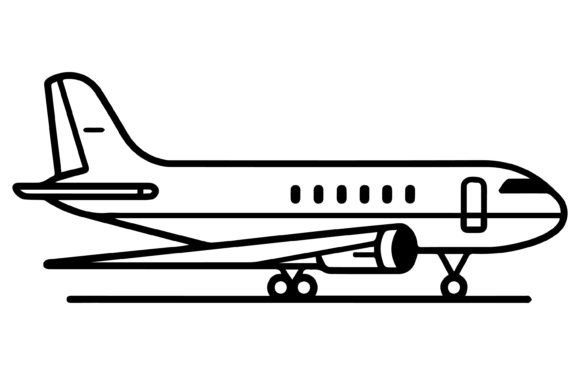
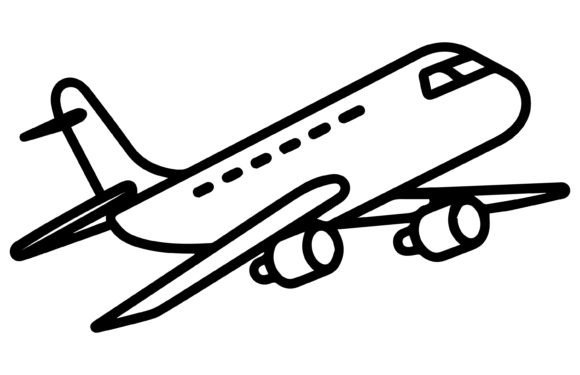
When you look at a high-quality Air Plane Vector Illustration, you aren't just seeing a picture of a jet; you are looking at a piece of usable design infrastructure. This specific style—an editable outline sketch of an airplane in a flat style—strips away the noise of photorealism to reveal the essential geometry of flight. It is a clean, confident representation of an airliner, defined by crisp lines, balanced proportions, and a minimalist aesthetic. The personality of this illustration is professional yet approachable. It doesn't scream for attention with gradients or shadows; instead, it commands respect through clarity. For a designer, entrepreneur, or brand strategist, this simplicity is a superpower. It represents the "flat design" philosophy that has dominated modern web design and app interfaces for the last decade, prioritizing function and instant recognition over decorative complexity.
The appeal of this vector art lies in its neutrality and versatility. It acts as a visual chameleon, capable of adopting the personality of whatever brand it represents. Whether you are building a travel agency startup, a logistics company, or a financial advisory firm, the outline drawing of a plane serves as a universal symbol for movement, progress, and global reach. Because it is a stock vector illustration, it is mathematically constructed rather than pixel-based. This means the "ink" is perfect at any size. You can scale this airliner to fit a favicon on a browser tab or blow it up to the size of a billboard without losing a single ounce of sharpness. This scalability makes it a foundational asset for any creative professional looking to maintain high-resolution standards across diverse media.
Strategic Applications for Digital and Print
The true value of this asset is realized when you move it from your downloads folder into active projects. For mobile apps and websites, an outline drawing plane in a flat style is indispensable. In UI/UX design, heavy, complex graphics often slow down load times and clutter the user experience. This vector illustration solves that. It works perfectly as an onboarding graphic, a 404-error page illustration, or a section divider. Because the style is clean, it pairs exceptionally well with modern sans serif fonts and geometric display fonts, creating a cohesive visual hierarchy that guides the user's eye without overwhelming them.
Beyond the screen, the utility extends heavily into print and presentation materials. Imagine a corporate pitch deck; using this illustration as a background element or an icon set allows you to illustrate concepts like "global expansion" or "fast delivery" instantly. For packaging design, particularly in the travel industry or for products shipped internationally, the airliner graphic adds a layer of professionalism. It signals that the brand is modern and efficient. Furthermore, for templates—whether for resumes, invoices, or social media posts—having a consistent, high-quality vector image ensures that your brand identity remains intact. The file formats included in the zip file (typically EPS and JPEG) ensure that you have the flexibility to edit the raw vector paths in Adobe Illustrator for total customization, or use the high-res JPEG for quick placement in software that doesn't support vector editing.
Designing with Intention: Editing and Pairing
One of the most practical features of a premium vector illustration is the ability to edit it. An "editable outline sketch" means you are not locked into the original design. You can change the stroke weight to make the lines bolder for a rugged, industrial look, or thin them out for a delicate, luxury feel. You can alter the color to match your specific brand palette. If your brand identity relies on a specific shade of teal, you can apply that to the aircraft in seconds. This level of control allows you to treat the illustration not just as a picture, but as a typeface of shapes—a system of visual elements that can be adjusted to fit the context of your layout.
When integrating this asset into your design assets library, consider the principle of font pairing. A flat, outline illustration pairs best with typography that shares its structural integrity. A geometric sans serif font often works best for headers, mirroring the clean lines of the plane, while a legible serif font can provide a classic contrast for body text. Avoid overly complex script fonts or handwritten fonts that might clash with the precision of the vector lines. The goal is to create a visual conversation between the text and the image. When the illustration and the typography are in harmony, the result is a cohesive brand perception that feels intentional and polished. This consistency is what builds trust with an audience, whether they are viewing your site on a mobile device or holding a printed brochure.
Licensing and Usability for Creators
For the hobbyist, crafter, or small business owner, the technical specifications of a file matter just as much as the aesthetics. The fact that this vector illustration is "ready to use for all devices and platforms" is a significant advantage. It eliminates the guesswork regarding resolution compatibility. However, when working with stock vector illustrations, it is vital to understand the commercial licensing. Most premium assets allow for use in end-products for sale (like merchandise or templates), but they usually restrict the redistribution of the raw source file. Always review the license to ensure your specific use case—whether it is a logo design, a t-shirt print, or a web banner—is covered.
Ultimately, an Air Plane Vector Illustration is more than just a clipart image; it is a strategic tool for visual communication. It offers a way to convey complex ideas like travel, speed, and connectivity in a single, elegant stroke. By choosing a high-quality, editable outline sketch, you are equipping yourself with a design asset that respects the principles of modern typography and flat design. It allows you to build a brand identity that is scalable, consistent, and visually engaging across every touchpoint, from a small mobile app icon to a large-scale presentation screen. For the modern creator, this kind of versatility isn't just nice to have—it is essential.